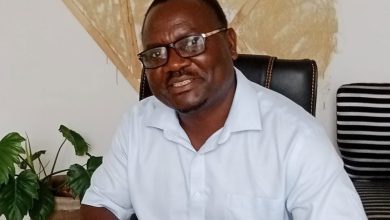
Our News Analyst WYCLIFFE NJIRAGOMA engages Parliament’s Legal Affairs Committee chairperson Gilbert Khonyongwa on a Constituency Development Fund (CDF) management Bill that President Peter Mutharika refused to sign into law. What is the future of the constitutional amendment widely passed by Parliament? Excerpts:
Q: Following the President‘s snub, do you maintain the Legal Affairs Committee’s earlier position that the Bill is constitutionally sound?

A: As a 23-member committee, the decisions and resolutions are made collectively. As such, I cannot give a personal view or position.
Q: Does the President’s veto change your view on the relevance of the amendment to address CDF management gaps?
A: The committee handles issues that have been referred to us by the House. Once we review the law, we prepare and present a report to the House . That is the end of our work. As such, it is not possible to take a position on processes beyond my committee‘s ambit.
Q:Doesn‘t the withholding of the President‘s signature raise questions about your role as chairperson of a committee that was supposed to guide Parliament on such a controversial legislation?
A: That is not correct. Decisions of parliamentary committees are made following robust engagement among the members. My committee is very privileged; it is composed of individuals drawn from diverse backgrounds, including four prominent lawyers. [This is] a very rich and deep pool of experience, expertise and knowledge. Decisions of the committee are, therefore, reflective of the committee, not the chairperson. The chair is just the spokesperson of a committee.
Q: As a ruling party MP, don‘t you feel the President‘s stand undermines your committee‘s authority?
A:Not at all. Firstly, the President is entitled under the law to withhold assent to a Bill so long he has reasons for the same. If he has opted not to assent, it does not mean that he has undermined the Parliament or the Legal Affairs Committee. Review of a Bill by my committee is just one of the many processes a Bill undergoes.
Secondly, parliamentary committees make independent decisions that are non-political. I carry out my function as the chairperson of the Legal Affairs Committee as a member of Parliament, not as a member of the ruling party.
Q: Do you see the Bill being re-tabled or the President’s stance closes that chapter?
A: I don‘t know what will happen next. May be the sponsor of the Bill Hon Chambulanyina Jere would be in a better position to comment. For starters, the committee is not the initiator or owner of the Bill. We only reviewed it after it was referred to us. Pursuant to its mandate, the committee presented its report to the full House that adopted it. The House proceeded to debate [the Bill] and pass it unanimously. In the next five years, there will be many bills that will pass through my committee and some will meet the same fate. This is normal and it happens all the time.
Q: How does your committee intend to prevent similar scenarios in the future?
A: The committee will continue playing its role diligently and independently in accordance with its mandate. The proceeding processes—like debating, passing of the Bill by the House and subsequent assent or withholding of the same—are really beyond its scope and control.